Tooth Washer
Lock washer with internal or external teeth — UNI 8842.
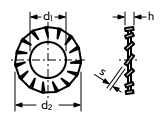
| Size | d1 | d2 | s | Height h | n | Weight /100 |
|---|---|---|---|---|---|---|
| 1.6 | 1.7 | 3.6 | 0.3 | 0.9 | 9 | 0.0019 kg |
| 1.8 | 2.0 | 4.0 | 0.3 | 0.9 | 9 | 0.0022 kg |
| 2 | 2.2 | 4.5 | 0.3 | 0.9 | 9 | 0.0029 kg |
| 2.2 | 2.4 | 5.0 | 0.4 | 1.2 | 9 | 0.0047 kg |
| 2.5 | 2.7 | 5.5 | 0.4 | 1.2 | 9 | 0.0057 kg |
| 3 common | 3.2 | 6.0 | 0.4 | 1.2 | 9 | 0.0064 kg |
| 3.5 | 3.7 | 7.0 | 0.5 | 1.5 | 10 | 0.0109 kg |
| 4 common | 4.3 | 8.0 | 0.5 | 1.5 | 11 | 0.0140 kg |
| 5 common | 5.3 | 10.0 | 0.6 | 1.8 | 11 | 0.0266 kg |
| 6 common | 6.4 | 11.0 | 0.7 | 2.1 | 12 | 0.0345 kg |
| 7 | 7.4 | 12.5 | 0.8 | 2.4 | 14 | 0.0501 kg |
| 8 common | 8.4 | 15.0 | 0.8 | 2.4 | 14 | 0.0762 kg |
| 10 common | 10.5 | 18.0 | 0.9 | 2.7 | 16 | 0.1186 kg |
| 12 common | 13.0 | 20.5 | 1.0 | 3.0 | 16 | 0.1549 kg |
| 14 common | 15.0 | 24.0 | 1.0 | 3.0 | 18 | 0.2164 kg |
| 16 common | 17.0 | 26.0 | 1.2 | 3.6 | 18 | 0.2863 kg |
| 18 | 19.0 | 30.0 | 1.4 | 4.2 | 18 | 0.4652 kg |
| 20 common | 21.0 | 33.0 | 1.4 | 4.2 | 20 | 0.5593 kg |
| 22 | 23.0 | 36.0 | 1.5 | 4.5 | 20 | 0.7093 kg |
| 24 common | 25.0 | 38.0 | 1.5 | 4.5 | 20 | 0.7574 kg |
| 27 | 28.0 | 44.0 | 1.6 | 4.8 | 22 | 1.1364 kg |
| 30 | 31.0 | 48.0 | 1.6 | 4.8 | 22 | 1.3248 kg |
No sizes match your search.
All dimensions in mm. Weight figures are indicative (steel), per 100 pieces.
Glossary
- d1
- Inner (hole) diameter
- d2
- Outer diameter
- s
- Wrench size (across flats)
- h
- Height / thickness
- n
- Number of teeth
Frequently asked questions
What standard governs the tooth washer?
UNI 8842 — the dimensions in the table below (nominal diameter, thread pitch and all fixed geometry) are taken directly from that standard.
Are these dimensions in millimetres?
Yes — all values are in mm, matching the metric ISO/UNI standards these components are drawn from. There are no imperial variants in this table.
What is the difference between d1/d2 and the nominal size?
The nominal size (used in the designation, e.g. "10") matches the bolt or screw diameter the washer is meant for. d1 is the actual hole diameter (slightly larger than nominal, for clearance) and d2 is the outer diameter of the washer.
References & further reading
- Lock washers — background reading (Washer — Wikipedia) — the source standard for the dimensions in this table.
Carry this table in your pocket
MechaHandbook has this dimension table and the rest of the standard components library offline, no internet required.
Download the app